
The 28th Offshore China Convention 2026 — OC2026 — was held in Shenzhen on June 16–17, 2026. The event brought together representatives of global energy operators, engineering companies, shipyards, technology suppliers and stakeholders from across the offshore value chain.
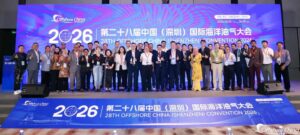
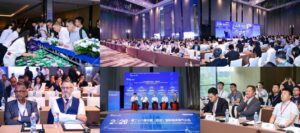
This year’s edition focused on high-quality offshore energy and equipment development. The conference programme emphasized international cooperation, industrial upgrading, deepwater project development and the creation of more resilient offshore supply ecosystems.
Participants included representatives of CNOOC, Petronas, Petrobras, Eni, Equinor, Bumi Armada, PT Medco E&P, Myanmar Oil & Gas Enterprise and Timor-Leste’s national oil company. Keynotes and panel discussions covered offshore exploration and production, deepwater engineering, subsea systems, FPSO and FLNG solutions, offshore drilling and completion, offshore wind, smart construction and digital transformation.
The first day was dedicated to the strategic outlook for the offshore sector. CNOOC specialists shared experience in digital transformation across upstream operations and deepwater projects in the South China Sea. Petronas presented Malaysia’s digital roadmap for upstream assets, while Eni discussed CCUS deployment and low-carbon energy transition frameworks. Emerging deepwater exploration opportunities and cross-sector collaboration models were also among the major topics.
The second day featured parallel forums focused on technological innovation and low-carbon facilities. Discussions covered subsea systems, ultra-deep seabed resource development, optimization of exploration and production projects, decarbonization of floating production assets, FLNG technology evolution, LNG containment system testing and infrastructure reuse to shorten project delivery timelines.
Offshore wind and its integration with the oil and gas sector formed another important part of the agenda. Experts discussed marine zoning policies, hybrid offshore asset development, floating platform design, large-capacity turbine installation and specialized service vessel development.
One of the key conclusions of OC2026 was the shift in offshore competitiveness from equipment and vessel manufacturing toward integration capabilities. The sector’s competitive advantage increasingly depends on full-cycle project management, engineering integration, technology verification, supply chain coordination and long-term asset operation and maintenance.
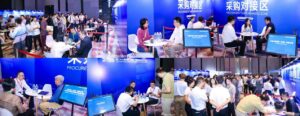
A major highlight of the event was the procurement matchmaking programme, held throughout both days of the conference. National and international operators, EPC contractors, shipyards and project developers arrived with concrete project requirements to hold direct one-on-one negotiations with regional offshore equipment and service suppliers.
OC2026 showed that China’s offshore manufacturing sector has become a crucial part of the global energy industry. Its role is no longer limited to production capacity. It is increasingly becoming a platform for connecting project demand, technological capabilities, supply chains and cross-border industrial cooperation.
The next major event will be Offshore Energy & Equipment Global 2026 — OEEG2026, scheduled for November 16–17, 2026, at the Shanghai World Expo Exhibition & Convention Center. The event is expected to expand cooperation among international oil and gas operators, EPC contractors, shipyards, module manufacturers, equipment vendors and technology service providers.
More information about OEEG2026:
https://www.oeeglobal.com/en/index

Leave A Comment